
New insights in fungal genome
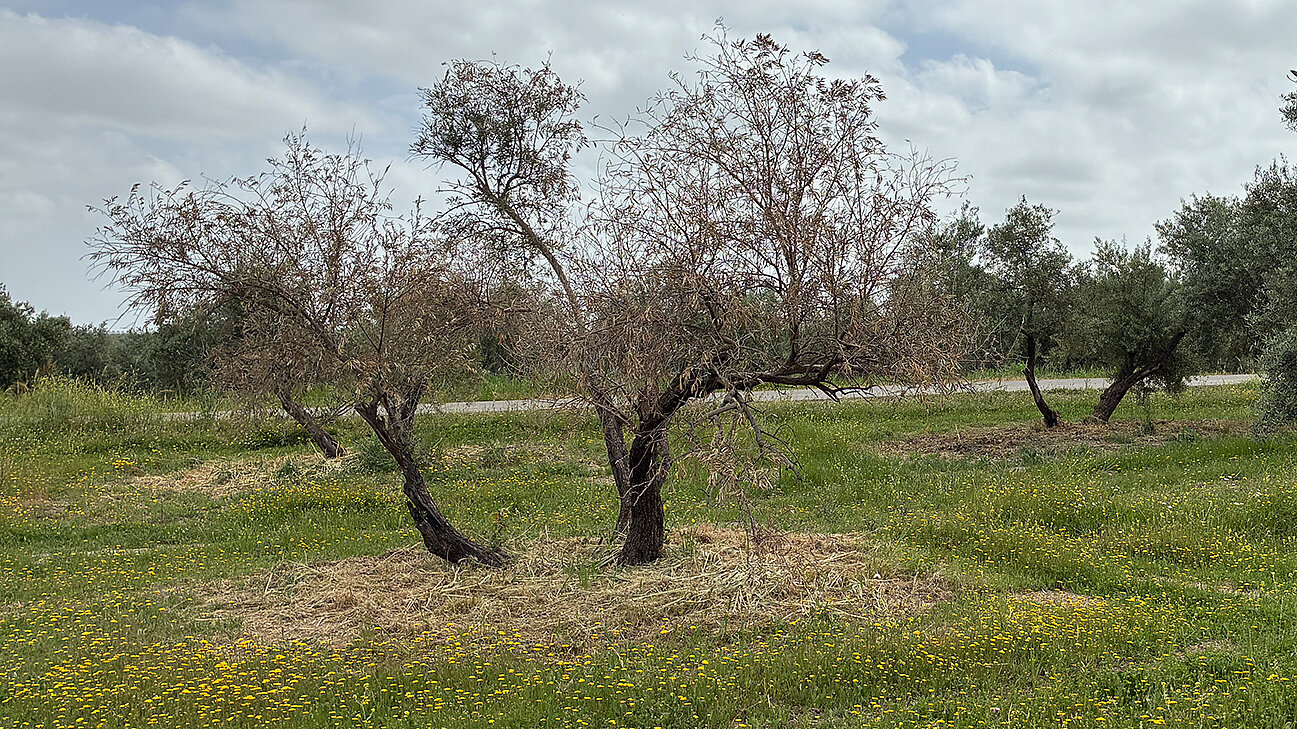
© Jesús Mercado Blanco
The most aggressive strains of Verticillium dahliae, a pathogenic fungus well known for causing wilt diseases in agriculture, cause complete leaf loss, particularly in cotton and olive trees. This results in significant yield losses, and even death of the affected plants. Until now, the genetic basis of how Verticillium dahliae established this “defoliation" was unknown. Bart Thomma and his team in Cologne have now identified the region of the fungal genome, responsible for the production of one particular protein secreted by the pathogen during the infection process, that triggers leaf loss in these host plants and causes the pathogen’s aggressiveness.
The results also suggest that so-called ‘starships’ drastically accelerate the evolution of the fungal genome. These are giant mobile genetic elements that can be transferred between different fungal species, and that can carry genes, including the gene that is responsible for defoliation. Genetic analyses have detected remnants of a likely Starship with the defoliation gene in some other fungi that cause wilt disease.
Understanding the genetic basis of how Verticillium dahliae causes such an aggressive disease is important to develop novel methods of disease control, involving improved specific detection of the most aggressive isolates, but also the breeding or engineering of resistant olive and cotton crops.
Press release from the University of Cologne
Original publication:
Doddi, A., Fiorin, G.L., Li, J. et al. A structurally unique effector shared between vascular wilt fungi drives cotton and olive defoliation. Nat Commun (2026). https://doi.org/10.1038/s41467-026-74504-z