
Laura Rose honoured as "Top Mentor"
© Susanne Kurz
© Susanne Kurz
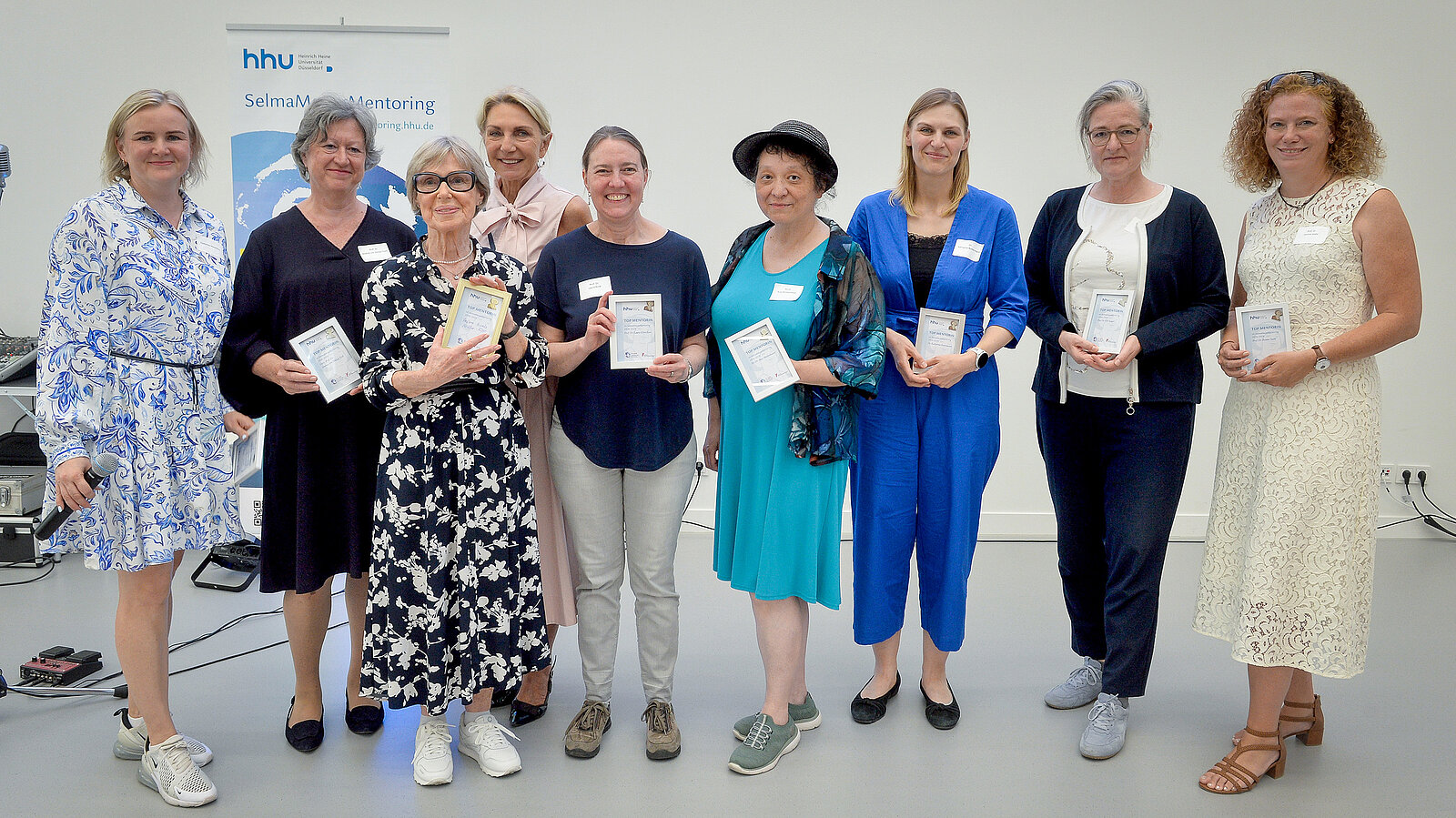
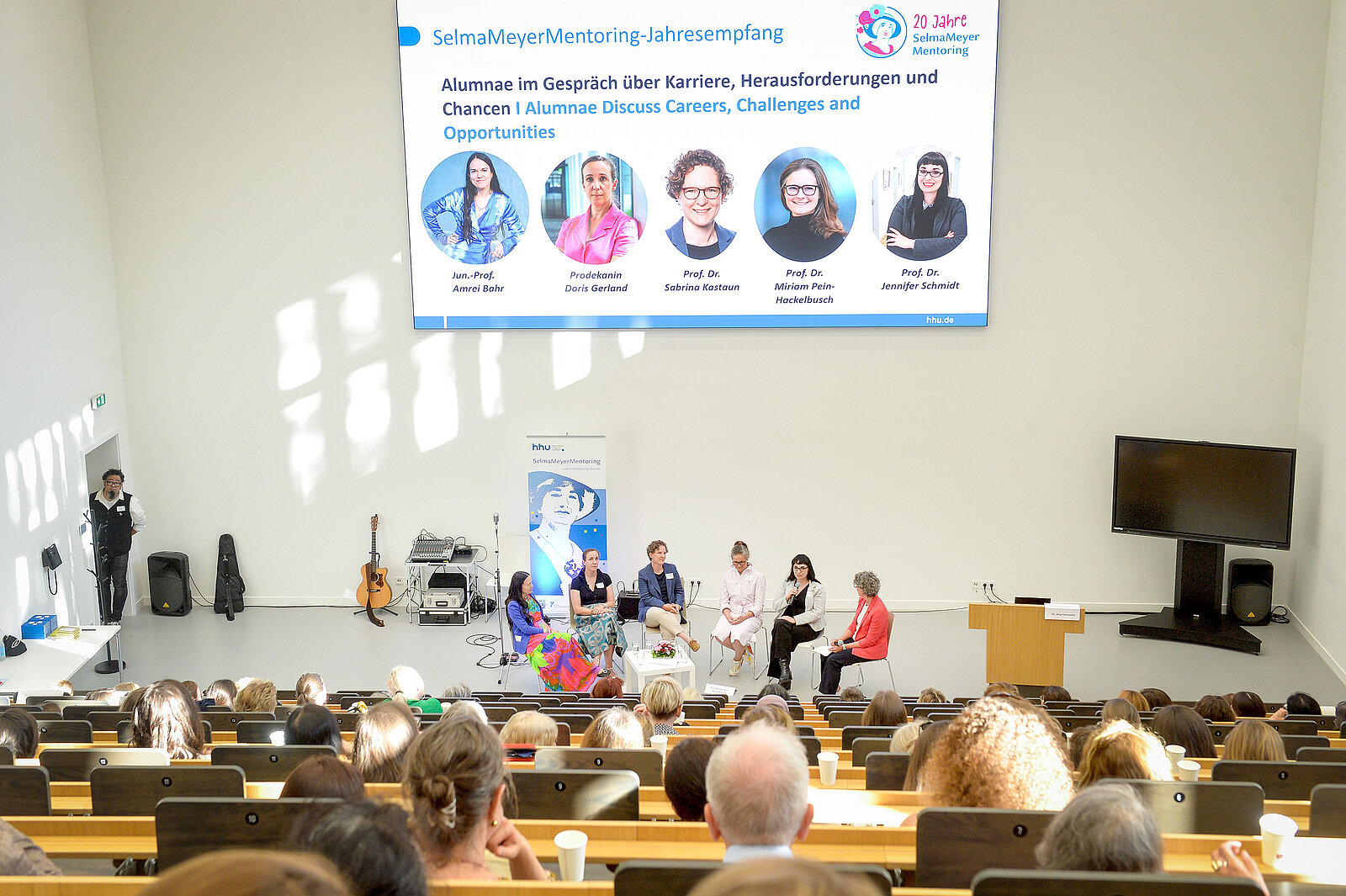
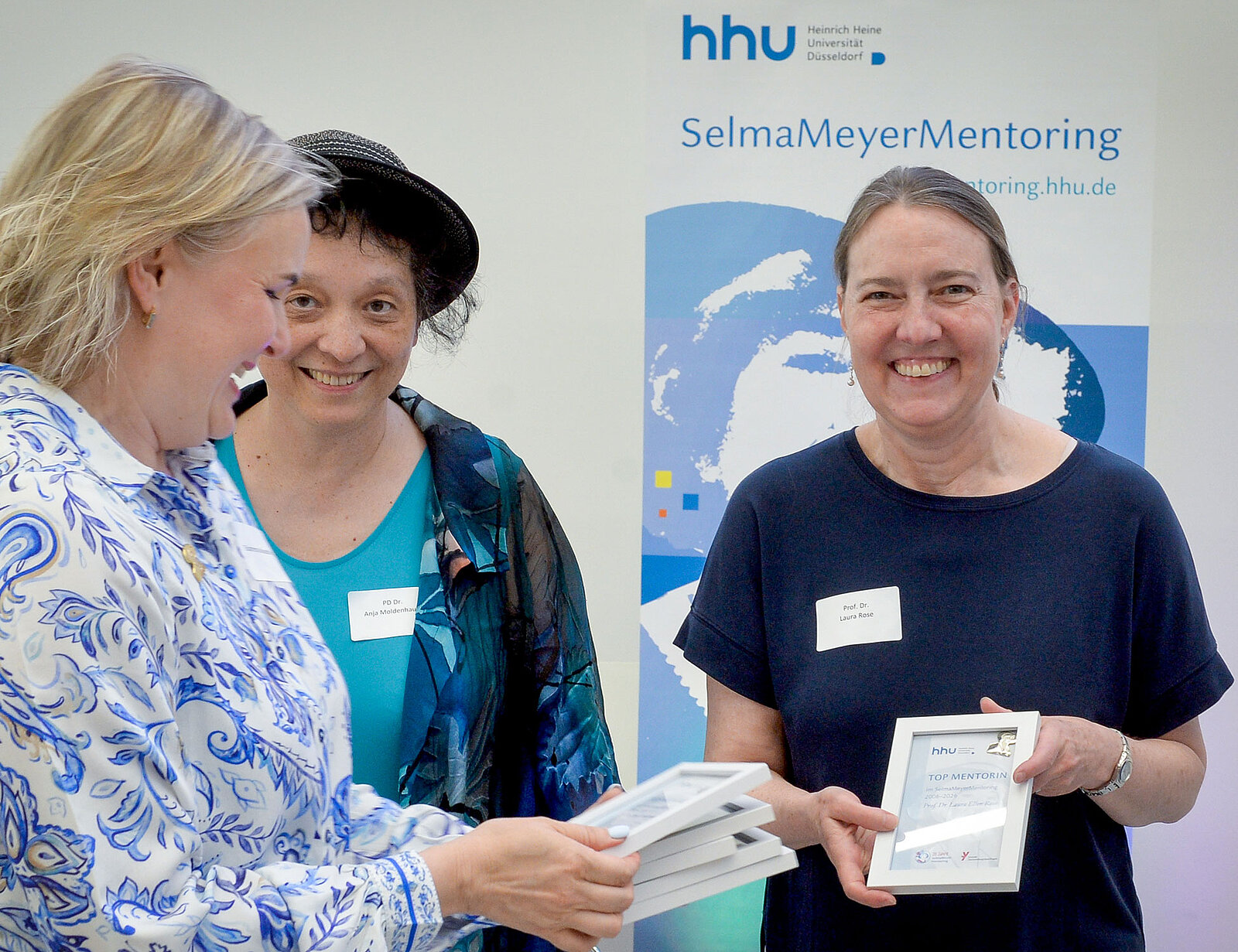
Laura Rose, Professor of Population Genetics at HHU, received the "Top Mentor" award at the 20th anniversary celebration of the Selma Meyer Mentoring programme at HHU on 9 July. The award recognises her outstanding commitment as a mentor to a high number of female early career researchers.
Much of what shapes an academic career never appears in a job description. How do you plan your next step, weigh research against teaching and administrative duties, or build the networks that decide who becomes visible and who gets promoted? Mentors help early career researchers read these unwritten rules. For women and members of marginalised groups, a good mentoring relationship also opens a space to name institutional barriers openly and to think through how to respond to them. Beyond professional guidance, relationships like these strengthen a mentee's confidence and self-worth, along with her sense of belonging in academia. Selma Meyer Mentoring is a structured mentoring programme at HHU, offered by the Central Equal Opportunity office and coordinated by Ekaterina Masetkina, that creates the setting for relationships like these to take shape.
Reflecting on what drew her to the role, Laura Rose describes mentoring as an exchange that works in both directions:
"Through my regular meetings with my mentees, I learned a lot about leadership and communication. The mentees showed me a special perspective that you don't get through the typical supervisor-student interactions. These interactions allowed me to recognise ways I can improve my own supervision style and strategies I can apply in my research group." (Prof. Dr. Laura Rose, HHU)
Work of this kind is usually carried out on top of an already full academic schedule, without formal reward. Institutional acknowledgement of mentoring still has room to grow, which makes recognition like the "Top Mentor" award a real sign of appreciation for the people who take it on. CEPLAS warmly congratulates Laura Rose on this well-earned honour and thanks her for the care she brings to supporting the next generation of researchers.