
Advancing Plant Biotechnology for Stress Resilience and Nutritional Food Security
© Ravi Saini
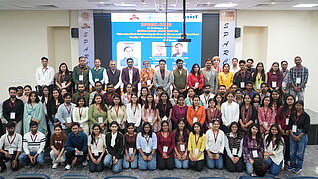
A vibrant Indo‑German partnership has been funded by the SPARC program in 2025 to 2026: Professor Sanjib Kumar Panda (Chair of Plant Biochemistry, Central University of Rajasthan, CURaj), previously an invited guest scientist with CEPLAS, and Professor Petra Bauer (Institute of Botany, Heinrich Heine University Düsseldorf) are leading a two‑year project to accelerate research on stress‑resilient, nutrient‑rich legume crops. Focusing on mungbean tolerance to acidic soils, common in North‑East India, the team is uncovering genes and mechanisms that control iron toxicity responses — knowledge that will drive development of hardy mungbean varieties for acidic soil‑stressed regions. A highlight of these efforts, has been the CURaj-hosted international SPARC conference on 25–26 February 2026 with participation of CEPLAS speakers: “Advancing Plant Biotechnology for Stress Resilience and Nutritional Food Security — Chances for Legume and Orphan Crops,” bringing together experts in plant physiology, genomics, biotechnology and breeding to explore innovative solutions for food security, malnutrition and sustainable agriculture.
This partnership exemplifies the international teamwork to translate cutting‑edge science into real agricultural impact. SPARC (Scheme for Promotion of Academic and Research Collaboration) is an initiative of India’s Ministry of Education to strengthen research ties between Indian higher-education institutions and top global universities.