
Excursions
Excursions to plant-related industries are frequently organised by CEPLAS to bring our young researchers early into contact with industry and thereby raise awareness of the differences between academic and industry-driven research.
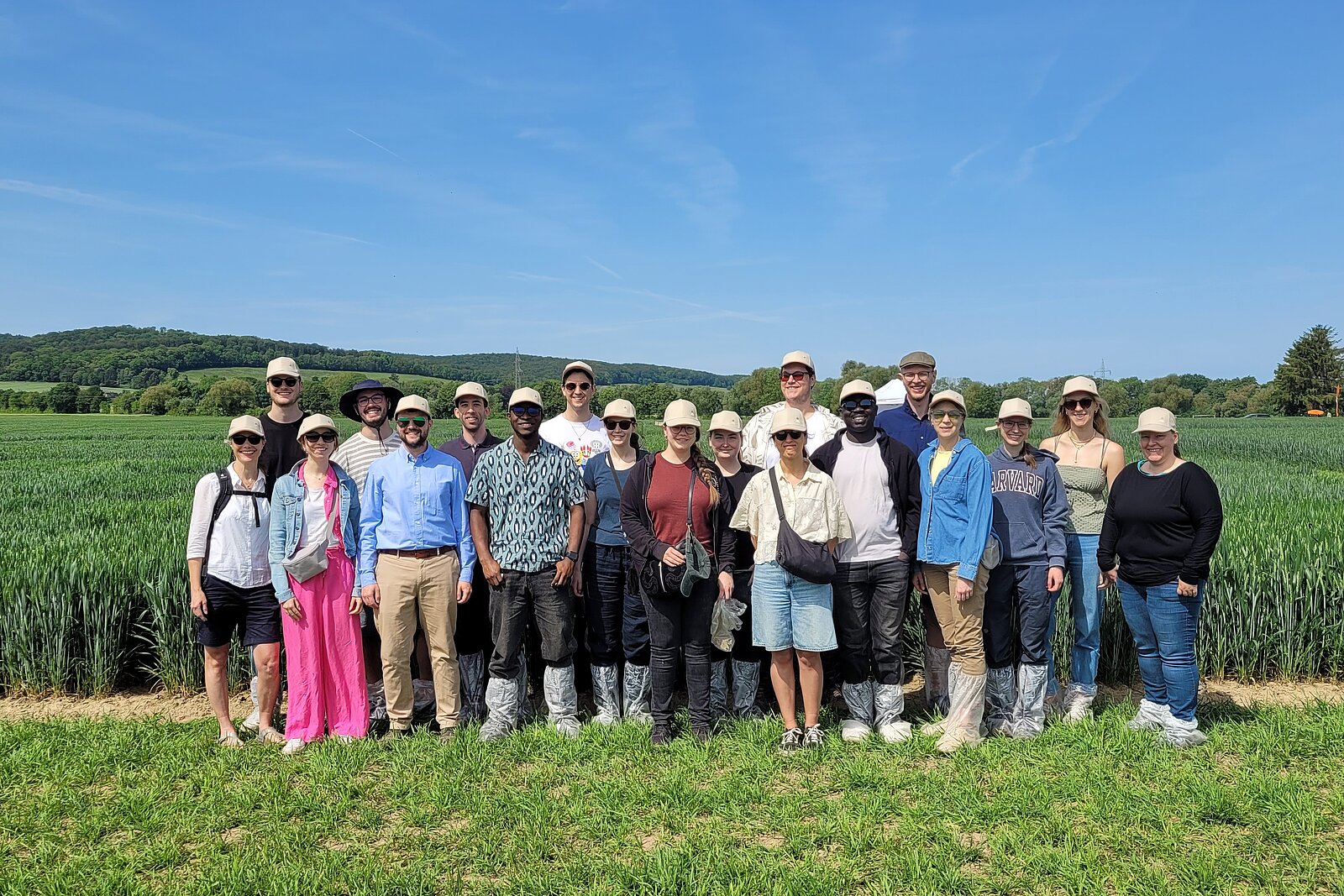
© CEPLAS

© CEPLAS

Past excursions
KWS SAAT SE & Co. KGaA, Einbeck, Germany; May 2026
KWS | Einbeck
Written by Anne Hofmann and Luca Weber
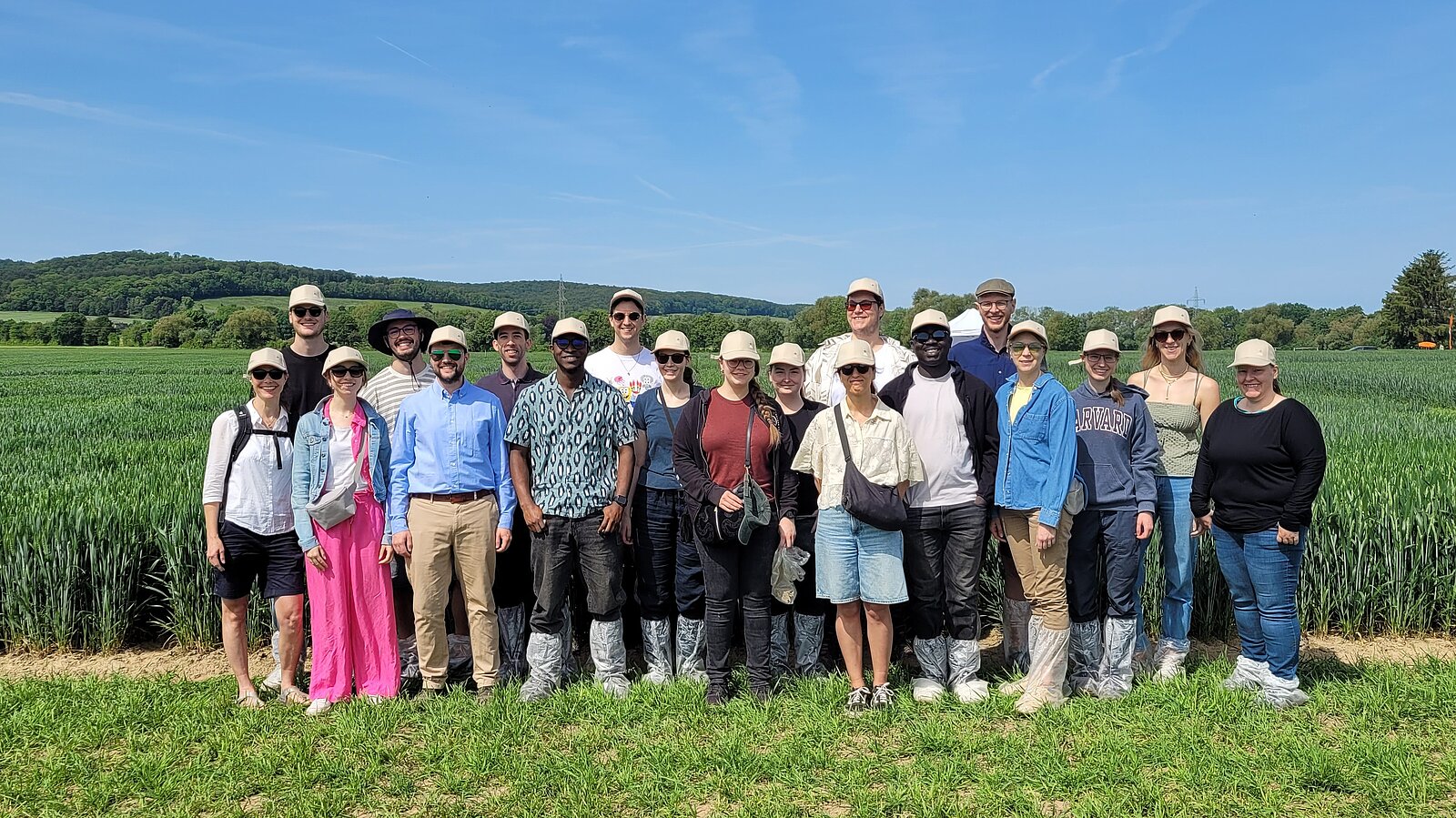
Together with 17 fellow Early Career Researchers from CEPLAS, we traveled from Düsseldorf and Cologne to Einbeck to take part at the TalentCampus@KWS 2026. We arrived in Einbeck the day before and explored the city centre during an interesting guided historical tour titled “Through the Centuries”. During the follow-up joint dinner at the traditional “Brodhaus”, one of the oldest pubs in Lower Saxony, we got to know each other better and tested some of the famous Einbecker beer.
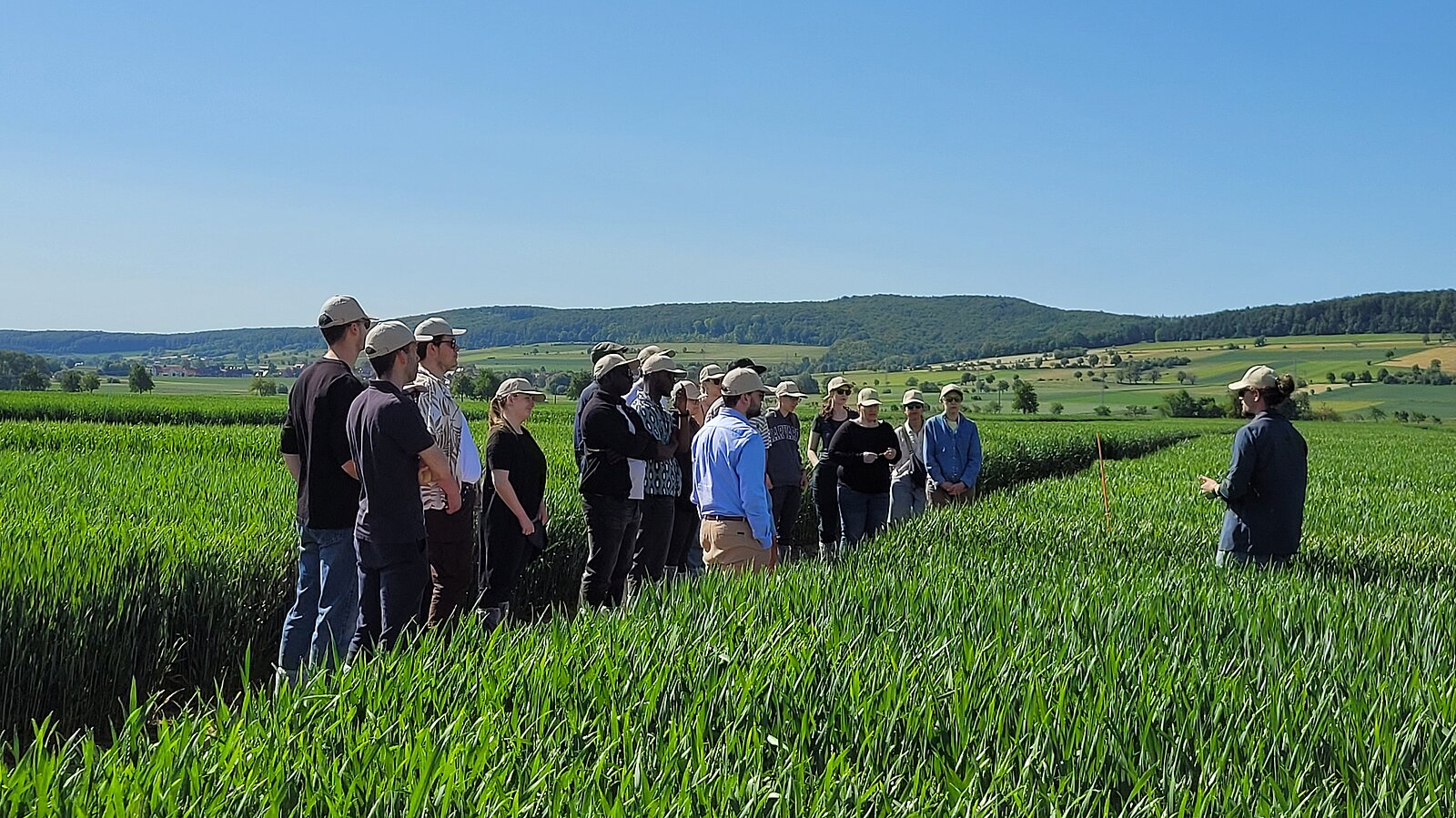
The following morning began with a field trip focused on winter wheat breeding, hosted by Alex Windhorst, Assistant Breeder at KWS. We learned about double haploid wheat breeding and climate adaptation strategies in modern breeding programs. Also, Alex highlighted the laborious process of variety registration and publication through the Federal Plant Variety Office (Bundessortenamt).
After the field trip, each of us followed an individual program of tours and talks tailored to their own interests.
Luca:
I continued my day by exploring the new product-oriented pea breeding strategy at KWS. Karen Ilsemann introduced us to product-driven breeding approaches for peas with future applications such as plant-based burgers and vegetable milk alternatives. I even had the chance to try pea-based milk in smoothies that were offered in an exhibition hall next door, which made the topic feel very tangible and close to everyday life. Another highlight for me was the greenhouse tour led by Isabel Blumenberg. I was especially intrigued by the automated PhenoFactory phenotyping system and the machinery used in state-of-the-art breeding research. Further, my day also included two talk sessions. The first, “Career Talks – Personal Growth” (pun intended), focused on career development and personal perspectives within KWS. The second session emphasized the importance of data science as the backbone for making reliable decisions quickly and for supporting breeders in modern research and breeding programs.
To conclude my visit, I explored the large-scale machinery used for plot trial assessments and phenotyping, including specially modified tractors designed for highly specific breeding and research purposes. It was impressive to see the level of engineering and customization involved in collecting precise field data and enabling data-driven decision-making. What stood out to me most throughout the excursion was the dedication of the KWS employees and their commitment to developing innovative strategies for a productive future in agriculture.
Anne:
My individual program offered a fascinating glimpse into different aspects of modern plant breeding and seed technology. One of the highlights was trying my hand at crossing sugar beet and oilseed rape, which provided practical insights into breeding workflows. I visited the seed quality laboratory, where advanced technologies such as CT-based 3D seed analysis and the Germination Speed Analyzer are used to assess seed performance and quality integrating robotics. Another stop focused on high-tech chemical analysis that supports quality control processes throughout breeding and production. At the PhenoFactory, autonomous mobile robots and hyperspectral imaging systems are used for high-throughput plant phenotyping. The integration of robotics, imaging technologies, and plant science demonstrated how modern phenotyping is becoming increasingly automated and data-driven. To round off the day, I not only participated in an interactive quiz but I also had the chance to network and find a future collaboration partner.
Overall, the program provided a great mix of hands-on experiences, cutting-edge technology, and valuable insights into how innovative plant breeding is shaping the future of agriculture.
Beyond the scientific program, the trip was also a great opportunity to connect with colleagues from different research groups, share experiences, and enjoy some time together outside the usual conference and laboratory setting.
We want to thank KWS and CEPLAS for this opportunity and Juliane Schmid in specific for organizing a great trip.
© CEPLAS
© CEPLAS
BASF | Nunhems, Netherlands; June 2025
BASF | Nunhems
Written by CEPLAS Early Career Researchers Yi Wang & Nathaniel O. Oragbon
On June 5 2025, a group of early career researchers from CEPLAS went on an excursion to BASF | Nunhems, located in the Dutch village Nunhem. Originally established in 1916 by the Meddens family, BASF | Nunhems has since grown into a global leader in vegetable seed production and now operates under the umbrella of BASF's Agricultural Solutions division. This visit offered a unique opportunity to explore the dynamic intersection of cutting-edge research and commercial plant breeding.
Arriving and Company Presentation
The researchers arrived at BASF | Nunhems in the morning. The weather was cloudy and a little cold, but they were warmly welcomed by Professor Jan van den Berg, the lead of scouting & partnering R&D. Walking through the quiet and beautiful historic park, the researchers entered a small castle where Jan delivered an engaging opening presentation to the CEPLAS researchers, setting the tone for the day’s visit.
Jan introduced the history and core business of BASF | Nunhems to the researchers. Interestingly, he highlighted that BASF | Nunhems breeds seeds of 20 different vegetable crops tailored to the global market-- including leeks, lettuces, tomatoes, and artichokes, which are popular in supermarkets. He also showed that BASF | Nunhems is a strong R&D company, particularly in breeding vegetables that are resilient to future challenges such as climate change, disease pressure and rising labour costs. For example, he showed how BASF | Nunhems’ hybrid artichokes exhibit improved resistance to drought. Jan’s presentation offered the CEPLAS researchers a valuable overview of BASF | Nunhems as an innovative and forward-looking company.
Guided Tours to the Genotyping Laboratory and Seed Processing Factory
After the introductory talk, CEPLAS researchers were taken on guided tours to the genotyping lab and seed processing factory, and accompanied by Jan and Dr. Markus C. Berns, Integrated Breeding Team Lead.
In the genotyping lab, CEPLAS researchers observed how large-scale genotyping of plants is performed in BASF | Nunhems in a robot-assisted workflow. For example, a combination of Array Tapes and water bath thermocyclers can process 230,400 PCR reactions in a single run-- a scale and efficiency that far exceed those in typical academic research facilities.
The subsequent visit to the seed processing factory provided insight into the full seed processing workflow, which includes seed reception, conditioning, seed priming, coating/pelleting, packaging and final storage for the market. Each of the two tours lasted an hour, offering the CEPLAS researchers a valuable opportunity to gain firsthand insight into the industrial R&D process in BASF | Nunhems, and to reflect on the contrasts between academia and industry in the field of plant science.
Lecture on Plant Breeding and Discussion
After the tours, Jos Suelmann, Lead Breeder, gave a short yet insightful lecture on the fundamentals of the plant breeding cycles. He explained that a typical breeding cycle begins with clear objectives, germplasm generation and selection, all aimed at developing successful strains that meet evaluation benchmarks. The researchers were very excited about plant research being done as evidenced by the question-and-answer section that followed. They asked questions about the specific objectives of breeding, the teamwork, and the roles of scientists. The researchers also discussed a lot about natural and artificial sources of genetic variations in breeding. The interesting discussions greatly enhanced the understanding of CEPLAS researchers regarding the work being done in BASF | Nunhems.
After this impressive visit, the CEPLAS researchers made their way back to Düsseldorf and Köln, minds buzzling with insight and possibilities, and one thing was clear: BASF | Nunhems created chemistry! The visit was more than just a tour—it was a powerful bridge between cutting-edge academic research and real-world plant breeding innovation. By stepping into the world of industry, the researchers gained not only practical perspectives but also forged connections that could shape the future of collaborative R&D. It was a day of new insights and inspiration!


KWS SAAT SE & Co. KGaA, Einbeck, Germany; June 2024
TalentCampus@KWS event
Written by the CEPLAS Early Career Researcher Kumsal Ecem Çolpan Karışan
At the beginning of June 2024, a group of CEPLAS researchers visited KWS SAAT SE & Co. KGaA in Einbeck, near Göttingen, to participate in the TalentCampus event organized by KWS. The visit started with a guided city tour on June 6th, during which researchers learned about the history of Einbeck, a town historically known for its beer production. After the city tour, the evening concluded with a pleasant dinner and a beer tasting at the tavern “Brodhaus.”
The next day, researchers had the chance to visit the company's production facilities and crop fields, gaining valuable insights into the challenges and technical solutions involved in crop and seed production. Afterwards, they went to the KWS Campus to spend the day at the TalentCampus event. Depending on their selections from the program, researchers attended different seminars and greenhouse tours at the KWS Campus. In addition, they had the opportunity to arrange one-on-one meetings with the HR department during the day, to get feedback on their CVs and to participate in a mock interview.
At the seminars, KWS Saat employees discussed their roles and the working environment within the company, providing researchers the opportunity to explore the differences between academia and industry in an open and friendly environment. In various workshops, the group also learned about different breeding objectives, such as increasing yields and resistance to biotic and abiotic stresses, as well as the various techniques used by the company to achieve these goals. As a nice addition to the program, researchers could enjoy some ice cream and popcorn made using maize plants grown by KWS.
In the end, this excursion offered a wealth of benefits and educational experiences for the CEPLAS researchers. They had the opportunity to observe the real-world applications of their scientific expertise within an industrial context, effectively linking theoretical research with practical agricultural operations. Engaging with industry professionals and obtaining tailored feedback on their career materials were extremely valuable, enhancing their understanding of the qualifications and experiences valued by employers in the agricultural industry. Moreover, the collaborative and interactive nature of the TalentCampus event promoted networking and professional development, providing researchers with fresh insights and motivation for their future career paths.


Bayer Crop Science, Monheim, Germany; February 2024
CEPLAS Guest Visit to Bayer Crop Science Headquarters
Written by the CEPLAS Early Career Researchers Benjamin Menn and Luca Weber
Introduction:
On February 27, 2024, a group of 15 early career researchers (ECRs) from the Cluster of Excellence on Plant Sciences (CEPLAS) and iGRAD-Plant had the opportunity to visit the headquarters of Bayer Crop Science, located in Monheim am Rhein. During the visit, the ECRs gained valuable insights into the latest advancements in industrial agricultural research and innovation. The visit particularly focused on the fields of pest control, data science and emerging technologies.
Highlights of the Visit:
1. Guided Tour on Pest Control:
The ECRs were warmly welcomed by Dr. Jürgen Benting, who led the ECRs on a comprehensive tour focusing on pest control mechanisms. Thereby, the ECRs were provided a very nice overview of the workflow during product development of a specific insecticide. Subsequently, the ECRs were guided through the laboratories and greenhouses to observe cutting-edge research in action.
2. LifeHub Presentation:
Upon arrival at the LifeHub building, Dr. Karl Collins, the Director of LifeHub Monheim, delivered an insightful presentation emphasizing the urgent need for agricultural innovation. Dr. Collins specifically highlighted the significant contribution of agriculture to global greenhouse gas emissions, estimated at approximately 18 % according to available literature. Furthermore, he elaborated on Bayer Crop Science's pivotal role in spearheading innovative and sustainable solutions to address not only climate change but also the interconnected issue of world hunger. Consequently, Dr. Collins opened a very fruitful discussion and highlighted the urgency of innovative thinking across the disciplines. Moreover, his talk served as a compelling introduction, setting the stage for following in-depth discussions and talks on ecotoxicology and the connection of quantitative biology and data science.
3. Talk Sessions:
The ECRs engaged in two informative talk sessions featuring experts in the fields. Dr. Arnd Weyers, the Ecotoxicology expert at Bayer Crop Science, delved into the topic of "Environmental Safety of Modern Crop Protection Products." Dr. Weyers thereby did not only introduce the workflow during development of regulatory guidelines for crop protection solutions, but he also provided valuable insights into the regulatory requirements necessary for crop protection products to achieve legal approval.
Dr. Michael Edmund Beck, the Chief Data Scientist at Bayer Crop Science, offered a comprehensive perspective on quantitative biology from the viewpoint of a data scientist. He explored the interconnectedness of quantitative biology and its wide range of applications, highlighting its significance in agricultural research as well as its broader implications across various scientific disciplines.
4. Start-up Spotlight:
Dr. Prateek Mahalwar, Co-founder and CEO of BIOWEG, shared insights into the startup's innovative solutions aimed at replacing microplastics in agriculture and other industries. Dr. Mahalwar shared his experiences on his way from being an early career researcher himself to founding his own startup company. He thereby did not only deliver valuable insights into entrepreneurial endeavors within the biotechnology sector, but also catalyzed discussions on potential collaboration opportunities within the future.
5. Networking and Discussions:
Throughout the visit, the ECRs had the opportunity to engage in discussions, ask questions, and network with professionals from Bayer Crop Science. The interactive nature of the sessions facilitated knowledge exchange and provided the CEPLAS researchers with insights into how science is practiced in an industrial setting, specifically at Bayer Crop Science.
Conclusion:
The visit to Bayer Crop Science headquarters in Monheim am Rhein provided the ECRs from CEPLAS and iGRAD-Plant with valuable insights into the latest developments in agricultural research and innovation. From guided tours to engaging discussions with experts, the agenda offered a comprehensive overview of pest control strategies, data science applications, and emerging technologies in agriculture for a more sustainable future. The visit not only enriched the knowledge of the participants but also paved the way for potential collaborations in addressing pressing challenges in the agricultural sector.
Acknowledgments:
CEPLAS extends its gratitude to Bayer Crop Science for hosting the visit and providing an enriching experience for the ECRs. Special thanks to all the speakers, tour guides, and staff involved in organizing and facilitating the event.


Bayer Crop Science, Monheim, Germany; November 2023
Exploring sustainable “Pest Control” at Bayer
Written by the CEPLAS Early Career Researchers Abdulkabir O. Abdulmalik and Nhu L.T. Tran
Our recent guided tour at Bayer provided a fascinating insight into the cutting-edge developments in pest control, led by Jürgen Benting (LifeHub Monheim). The tour featured an in-depth exploration of Bayer's commitment to sustainable practices and environmental responsibility.
Insecticide Development:
Bayer is at the forefront of developing insecticides that are not only highly specific but also environmentally conscious, avoiding harm to beneficial organisms such as honeybees. The journey of insecticide development involves a rigorous process of screening thousands of molecules through in vitro and in vivo assays.
The selection process narrows down the candidates, leading to extensive testing on plants. Parameters such as efficacy, absorption by plants, effectiveness, and residuals are meticulously evaluated. Before field tests, plants are subjected to simulated weather conditions, including rain, high temperatures, and humidity, to gauge the compounds' activity in various climates.
Field Testing:
The final phase of testing takes place in the field, spanning different locations both within and outside Europe. This comprehensive approach ensures that the developed insecticides are effective and adaptable to diverse environmental conditions.
Greenhouse Innovations:
Bayer's commitment to safety extends to its testing facilities. The guided tour also included a visit to a state-of-the-art greenhouse equipped with automatic spraying devices. These devices not only facilitate seamless lab-to-field transfer for testing but also play a crucial role in protecting the well-being of workers.
Talk Session
Ensuring safety of modern crop protection - insights from Maxie Kohler’s talk on metabolism studies
The talk aimed to shed light on Bayer's commitment to developing sustainable and safe pesticides, emphasising the importance of assessing residuals that make their way from plants and soil to livestock and eventually into the human body.
Maxie Kohler explained that while everything has a hazard potential, the actual risk is contingent upon exposure. The risk evaluation process involves analysing various parameters, starting with the identity and concentration of metabolites in food.
One key aspect of the talk was the integration of data of human food consumption. By incorporating these, Bayer ensures that the hazard potential is contextualised with the exposure in the broader scope of people's dietary habits. This approach allows for a more nuanced understanding of risk, considering not just the inherent hazard but also the practical exposure levels in everyday life.
Maxie Kohler emphasised Bayer's commitment to transparency and accountability in the risk evaluation process.
Modelling of insect development times using Dynamic Energy Budget (DEB) model - Christian Baden
This talk highlighted Bayer's approach to predicting development times in laboratory cultures of insects as a step towards effective pest control.
Modelling insect development trajectory requires critical considerations on the temperature dependence of growth behaviours and model variability in development times. Christian Baden’s talk focussed on the dynamic energy budget (DEB) approach that is being used to simulate organism performance in terms of growth and reproduction. In Bayer's commitment to enhancing food quality, the DEB approach proves valuable for analysing conditions in insect rearing, enabling informed decisions on optimal temperature regimes, and establishing ad libitum food levels. This was another session that showcased the incredible work that underlies the production of effective pest control products and management strategies.
Quantitative biology from the perspective of a data scientist - Dr Benjamin Buer
While exploring the “behind the scenes” of pest control product development, Benjamin shared interesting views on how data scientists help in the process of new target discovery and validation.
Benjamin Buer explained that target identification is one of the most critical steps in chemical genetics and drug discovery. Interestingly, Bayer adopts two complementary screening approaches to identify starting points for novel products: biological in vivo screening and target-based in vitro/in silico screening. Data scientists work at the intersection of these approaches. They work with the results of bioscreening to understand what the mode of action of a bioactive molecule and use in silico systems to facilitate target-based screenings. In this approach, knowledge graphs and systems biology are utilised for target discovery and target assessment.
Technological advancements in transcriptomics have helped in making the process of target discovery easier. Benjamin Buer explained how biological data has significantly contributed to cell type identification, cell hierarchy reconstruction, inference of regulatory networks, transcriptional bursting, and stochastic gene expression. These advancements have, in turn, facilitated the validation processes for target genes. Bayer’s team of data scientists continuously work to build computational tools to aid these processes. In the end, Benjamin Buer concluded, that integration of knowledge and insights generated by such tools is essential for target identification and validation.
The future of Innovation Agriculture: Eike Heilmann’s talk on small molecules research in the CropKey Era
Under the motto "produce more, restore more," Eike Heilmann shared insights into the team's journey, spanning from the design of novel molecules to the development of production lines aimed at minimising the carbon footprint. Products developed with this novel approach are called “CropKey”.
The core ethos of the "Innovation Agriculture" team reflects a commitment to not only increasing agricultural productivity but also contributing to ecological restoration. Eike Heilmann highlighted the dedication to creating new molecules from scratch, initiating a comprehensive process that encompasses screening and the establishment of production lines designed with sustainability at the forefront. Eike Heilmann also provided valuable insight into the time-intensive nature of small molecules research, emphasising that it typically takes 12-14 years "from first discovery to market."
The talk illuminated the forward-thinking approach of Bayer's "Innovation Agriculture" team with the CropKey concept. By prioritising the development of molecules with a novel and by-design-safe mode of action as well as sustainable production processes, the team exemplifies Bayer's commitment to shaping the future of agriculture responsibly. The 12 -14 years journey from structure to market highlights the dedication and patience required to bring about meaningful and impactful innovations in the field of crop protection and agricultural sustainability.
Conclusion
Bayer's dedication to sustainable and responsible pest control practices was evident throughout the guided tour. The company's holistic approach, from meticulous laboratory testing to extensive field trials, reflects its commitment to providing effective solutions while prioritising environmental and worker safety.
This report serves as an acknowledgement to Bayer's ongoing efforts to address pest control challenges responsibly and underscores its position as a leader in developing innovative, sustainable solutions for a greener future.

Bayer Crop Science, Monheim, Germany; August 2023
Written by the CEPLAS Early Career Researcher Anupama.
CEPLAS organized an industrial visit to Bayer AG, Crop Science Division (Global headquarter) at Monheim am Rhein on August 17, 2023, for CEPLAS early career researchers. Bayer AG, a leading life science company that developed Aspirin, was established in 1863. The Bayer CropScience Division is the largest agrochemical company and focuses on chemical and biological crop protection products , seeds and traits and digital farming.
Health for all, Hunger for none.
Dr. Jürgen Benting (Scientific Lead LifeHub Monheim) welcomed us at the main gate of Bayer CropScience. With a humble and outgoing attitude, Dr. Jürgen Benting explained the process of testing the insecticides on the different pests, such as sucking pests (Aphid), moths, mites, thrips, beetles and nematodes, without affecting the beneficial insects such as honey bee, ladybird and predatory mite. In addition to this, a detailed explanation was given regarding how insecticides target the nervous system of insects to kill them, different assays to test the toxicity of insecticides at the laboratory and field levels and the contribution of Bayer CropScience to worldwide crop protection. Then we all visited the research area where the plants are grown, and the insect rearing is carried out. Many products like fungicides, insecticides, and herbicides were displayed in the foyer, which aided us in better understanding the products manufactured by Bayer.
Next, an expert team of scientists from the field of entomology, metabolomics, and data science presented their respective field of work at Bayer. This session was quite interesting and informative as it gave us excellent insight into the interdisciplinary research world of Bayer. The topics of discussion were modelling insect development times to provide biologists with insects at the proper developmental stage necessary for molecules sensitivity assays, metabolism and kinetics of agrochemicals and quantitative biology from the perspective of a data scientist. The enthusiasm of Dr. Christian Ulrich Baden, Dr. Nina Kausch-Busies, and Dr. Marc Lamshöft during their presentation was appreciable. Through the Q&A session with them, we get to know more insights about the research, career path and achievement. A few challenges faced by the company that were discussed were as follow.
- The difficulty of accessing new varieties of insects for research due to the Nagoya protocol.
- Lack of the availability and accessibility of negative results in the database is challenging the machine learning approach to designing new compounds.
- The impact of pulling Roundup, a popular weed killer, in the market was also discussed briefly during the discussions.
After the Q&A session, we all had informal lunch with Bayer’s scientists, which was also engaging and fruitful. Everyone was telling about their research field, scientific journey, and experience. We ended up taking group photos for our memory.
Most of us are always curious to know the working style difference between academia and industry. This visit was helpful for young researchers to get more insights regarding their career path. We loved the spirit, knowledge, enthusiasm, and cooperation of Bayer’s scientists towards us during our visit. We felt so welcome and recommend the visit to all students of CEPLAS.


…and more:
- LemnaTec GmbH, Aachen, Germany; 2018
- WeGrow gmbH, Tönisvorst, Germany; 2017
- KWS SAAT SE, Einbeck, Germany; 2017
- Phytowelt Green Technologies GmbH, Cologne, Germany; 2016
- Metanomics GmbH, Berlin, Germany; 2016
- Keygne N.V., Wageningen, Netherlands and Nunhems B.V. (Bayer Crop Science), Nunhem, Netherlands; 2015
- Qiagen GmbH, Hilden, Germany; 2015
- Bayer Crop Science, Ghent, Belgium; 2014
- Saaten Union GmbH, Leopoldshöhe, Germany; 2013