
New Insights in Mechanisms of Plant Symbiosis
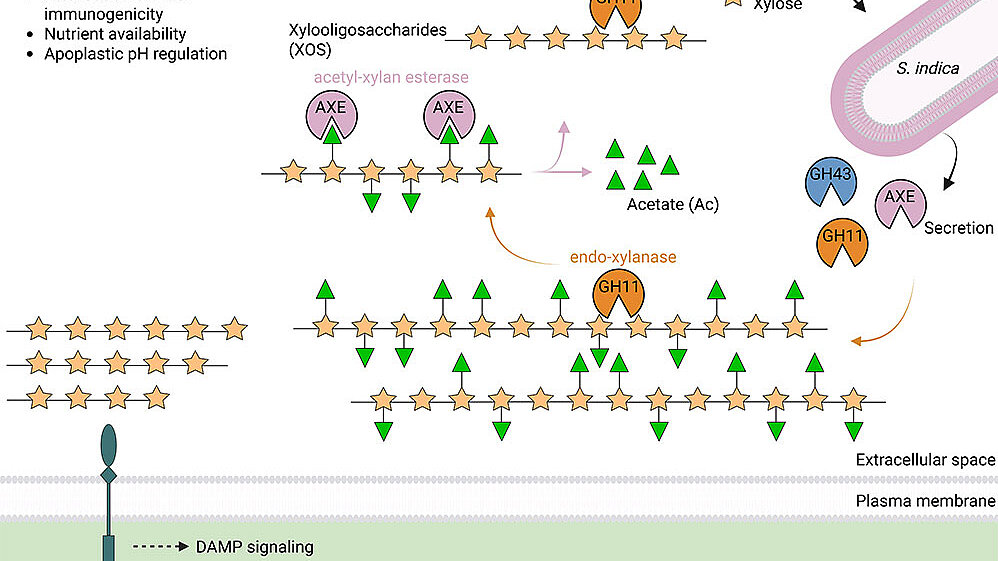
In a newly released study, CEPLAS member Alga Zuccaro and her team at the Institute for Plant Sciences, University of Cologne, address a central question in plant symbiosis research: how beneficial fungi can enter cereal roots without triggering excessive immune responses. They show that the root endophyte Serendipita indica uses a specialized enzyme module to remodel grass cell walls and promote symbiosis in monocot hosts such as barley. The study further reveals that this process must be carefully coordinated, because deacetylated xylan fragments can themselves enhance immune activation. The authors demonstrate that several enzymes act together: xylanases first release acetylated wall fragments, while SiAXE and other co-expressed enzymes further process these molecules to support colonization while limiting prolonged immune stimulation. They also find that overexpression of SiAXE accelerates early colonization but causes transient defense responses, whereas loss of SiAXE impairs later stages of fungal colonization. Overall, the work provides new mechanistic insight into how S. indica balances host accommodation and immune compatibility, and it highlights the importance of fundamental research for future sustainable agriculture.
Read the whole study here: https://www.cell.com/molecular-plant/fulltext/S1674-2052(26)00115-2