
Genetic treasure trove for adaptation
© Michael Anokye
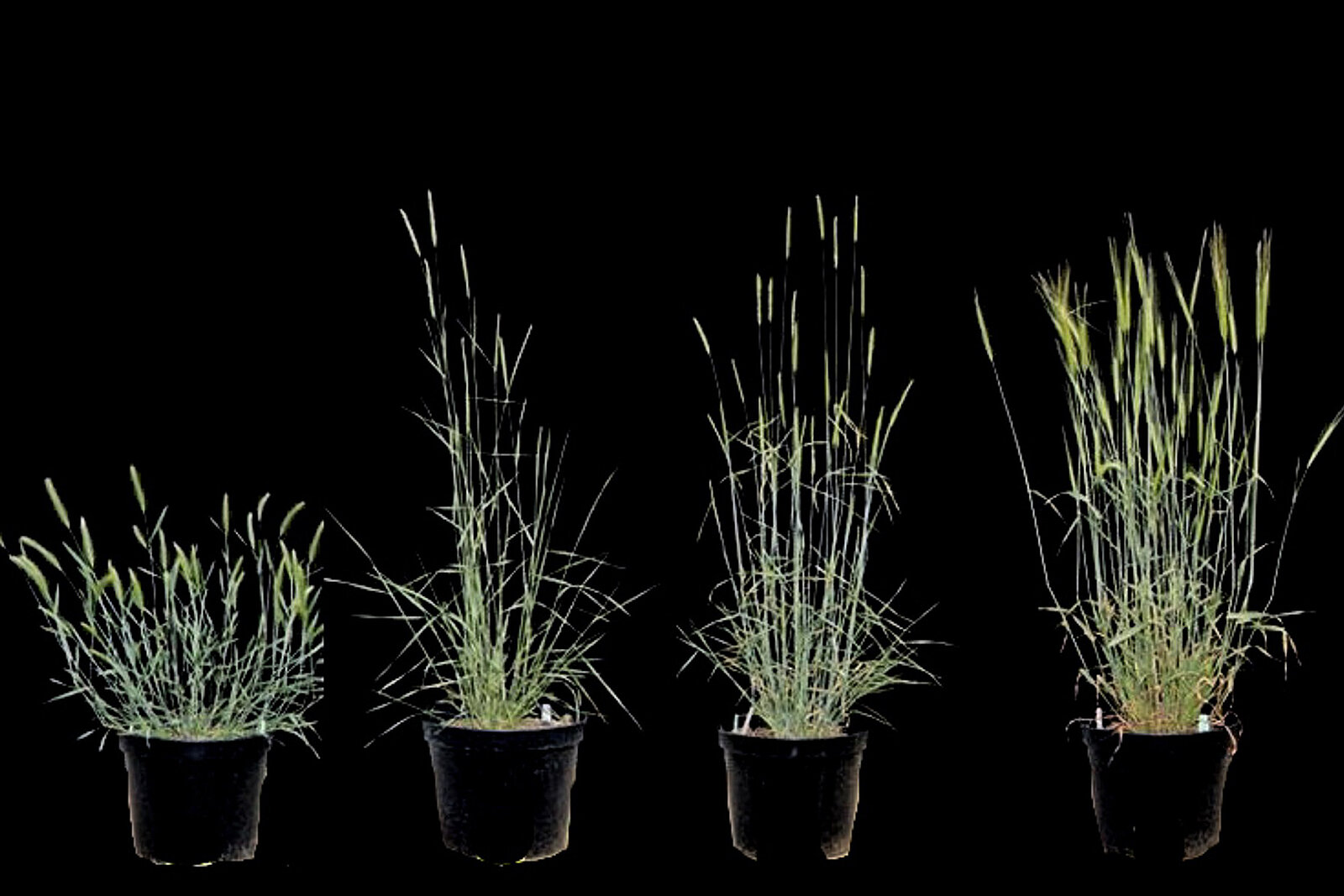
An international research team, supported by CEPLAS members Martin Mascher, Nils Stein and Maria von Korff,has generated de novo genome assemblies for 27 Hordeum species, close relatives of cultivated barley, revealing the remarkable genomic diversity within this agriculturally important genus. This genomic resource opens new avenues for deciphering the genetic basis of adaptation to diverse environments, uncovering novel traits, and exploring the evolutionary innovations that enable the genus to thrive under contrasting environmental conditions.
The wild relatives of the cereal crop barley have adapted to an extraordinary diversity of environments, from saline soils and drought-prone landscapes to freezing temperatures, and regions with contrasting seasonal conditions. Among the most striking evolutionary adaptations are the repeated transition between annual and perennial life history. This remarkable diversity offers a unique opportunity to decipher the genetic basis of environmental adaptation, uncover novel traits, and understand how these species evolved resilience to different biotic and abiotic stresses.
An international research team with participation of CEPLAS scientists compared 27 plant accessions representing 25 species of the genus Hordeum, including all recognised diploid species and selected polyploid representatives. To do so, they generated high-quality genome assemblies that provide a comprehensive view of the evolutionary history of barley and its wild relatives.
A key finding was that chromosome structures have changed substantially over the course of evolution, while the gene content is largely preserved across the Hordeum phylogeny. Particularly striking is the finding that central chromosome regions undergo much more extensive structural change than the outer regions. The team discovered large-scale rearrangements and inversions, stretches of DNA in the reverse orientation, in regions near the centromeres, which play a crucial role in chromosome segregation during cell division. Other regions retain traces of past hybridisation between species. The history of the genus resembles a network in which different evolutionary lineages have repeatedly exchanged genetic material.
Furthermore, sister species displayed wide variation in genome size, primarily driven by varying levels of transposon accumulation. These DNA elements, also known as “jumping genes”, can leave additional copies of themselves in the genome and account for an average of 86 percent of the genomes analysed.
The analysis of flowering time variation, a trait that plays an important role in environmental adaptation, demonstrates the potential effects of structural genome variation between these species. Some Hordeum species only flower after a prolonged period of cold while others can flower without this cold stimulus. These differences in flowering time regulation were linked to a distinctive arrangement of gene copies that gives rise to small RNA molecules. These may help to silence a gene that normally represses flowering. Together with additional variation in a key flowering-time gene, these findings reveal how wild Hordeum species, while largely retaining the same genes as cultivated barley, generate remarkable trait diversity through changes in gene regulation and genomic structure rather than changes in the genes themselves.
The Hordeum pangenome thus provides a powerful resource for systematically exploring how regulatory and structural genetic variation shapes adaptive traits, from diverse life-history strategies to resilience against environmental stresses.
Original publication: Feng, JW., Jiang, C., Strejčková, B. et al. Structural and regulatory evolution across the genus Hordeum. Nature (2026). DOI: https://www.nature.com/articles/s41586-026-11332-7